What's Next for Adaptation: The Brain & Climate Change
The National Academies' recent Climate Conversations webinar, Climate Change and the Brain, provided an informative overview of how a changing climate impacts our brains. This includes brain health - like the effects of exposure to high temperatures or increased air pollution - as well as the mental health impacts of trauma, grief or anxiety related to climate change or climate hazards. For adaptation practitioners, this is a reminder that both vulnerability assessments and identification of adaptation measures, should consider mental and brain health and that climate adaptation and mitigation can actually be brain health interventions. Ignoring this creates blind spots in vulnerability assessment, particularly regarding things like heat-related cognitive impacts and short- and long-term trauma-induced impacts which could complicate and inform engagement efforts.
A few resources to share from the webinar:
For Policy & Research
- The Neuro Climate Working Group (https://neuroclimate.org) - A first-of-its-kind global "action tank" of multidisciplinary partners from science, medicine, public health, policy, architecture, design, and community leadership. The group's goals are to advance research on climate and brain health, promote awareness of the issue, inspire action, influence policy to incorporate brain health into climate agendas, and build capacity. I'd encourage you to bookmark their resources page - https://neuroclimate.org/resources - for everything from short answers to FAQs on climate and brain health to articles, books, and podcasts on a wide range of climate and brain health topics.
For Community Engagement & Team Care
- Unthinkable.earth (https://www.unthinkable.earth/) - Founded by Generation Dread author, Dr. Brittany Wray, the Unthinkable.earth site includes a Resource Hub that is a repository and launching pad for information based on both topic and delivery method (i.e., read, listen, watch, etc) for all thinks related to climate and mental health. Adaptation practitioners can find materials in the Resource Hub (https://www.unthinkable.earth/resources) that could be incorporated into public involvement efforts or used to promote self-care for their teams and collaborators who have a heightened awareness and exposure to the realities of climate change impacts on a daily basis.
For Youth & Education
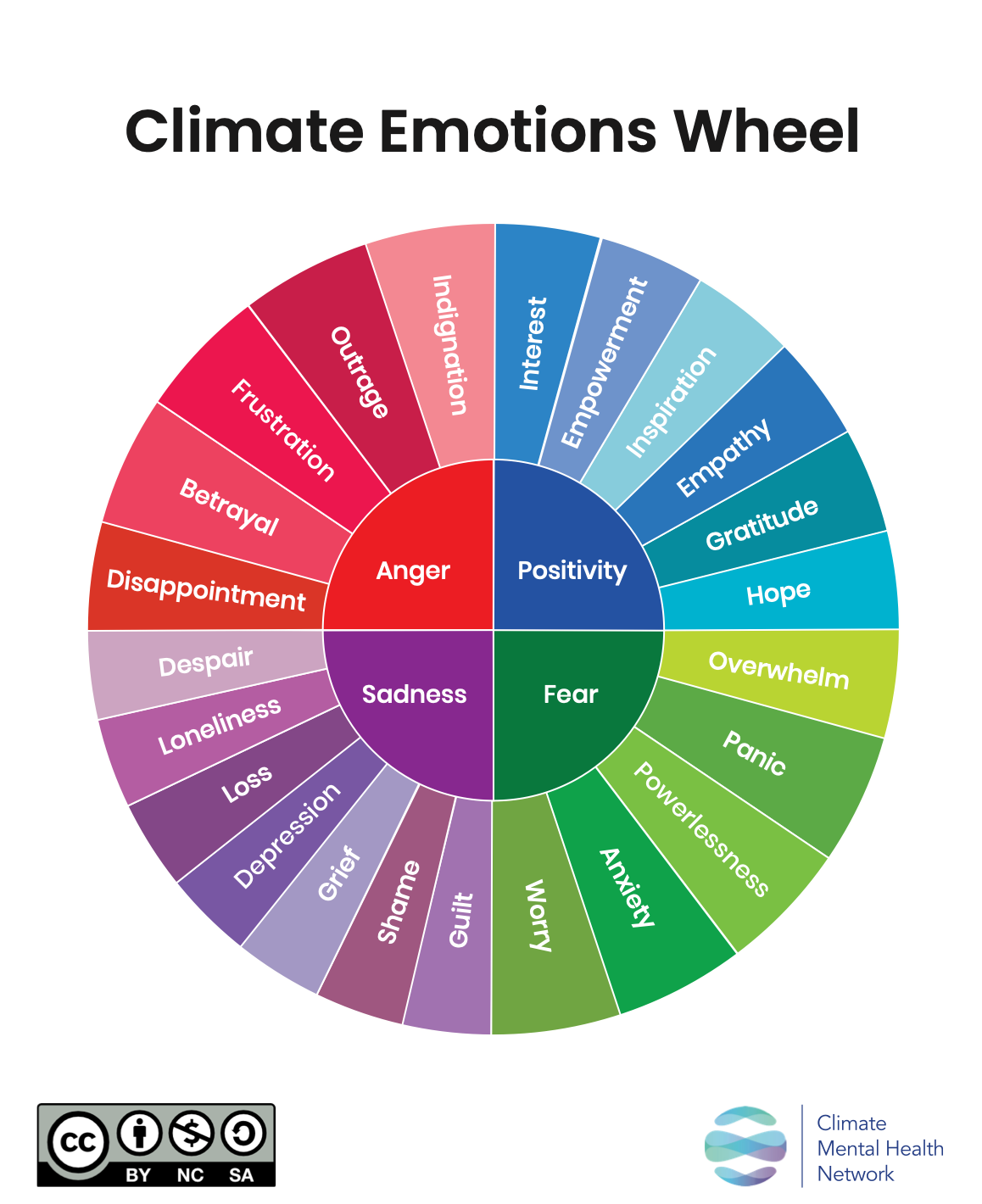
- Climate Mental Health Network (https://www.climatementalhealth.net/) - With a particular focus on youth voices, the Climate Mental Health Network provides resources for youth, parents and caregivers, and educators. The site is incredibly resource-rich, covering a wide range of topics related to climate change, natural disasters and mental health. The Climate Emotions Wheel (https://www.climatementalhealth.net/wheel) (shown above and available in many languages as well as in emojis) is a way to identify feelings related to climate change and could be an impactful conversation-starter for community engagement for adaptation professionals.
By purposefully integrating brain and mental health considerations into climate vulnerability assessments and adaptation planning, we move beyond focusing on physical resilience to climate hazards and begin actively addressing the cognitive resilience of the communities we serve.
Note: The views expressed on What's Next are my own and do not necessarily reflect the official position of my employer.